Month-by-Month Home Routine: A Yearly Plan
Published 2026-10-15

Many people do their home chores in panic bursts. Guests coming? Clean everything. First cold night? Hunt for the space heater and find out the filter's gross. It worked, kind of, but I was always tired and always behind.
A month by month home routine fixed most of that for me. The idea is simple. You spread the bigger jobs across the calendar so you're never trying to do them all in one weekend. Each month gets one main focus, and the small weekly stuff keeps the house from sliding backward in between.
Below is a framework you can use. Treat it as a starting point. Your climate, your family and your work schedule will change what goes where, and that's fine.
Short on time? Our top picks: Google Calendar, Todoist, Trello and Notion. See all picks
Pick one focus for your month by month home routine
This is the heart of the whole plan. One focus. Not five. If you give each month a long list, you may ignore it by the second week. One clear theme is easy to remember, and it gives you permission to let everything else wait.
Here's my basic calendar, which works like a simple home routine planner:
- January: reset and organize. Sort paperwork, set up your planner, clear the junk drawer.
- February: deep-clean the bedrooms. Flip or rotate mattresses if your mattress allows it, wash pillows, clear under the beds.
- March: spring cleaning. Windows, closets, baseboards, the stuff you only notice when the sun hits it.
- April: declutter and donate. Fill a bag or box and get it out of the house the same week.
- May: outdoor spaces and storage. Patio, balcony, garage, shed, or even just the hall closet.
- June: kitchen and pantry reset. Check dates, wipe shelves, clean out the fridge properly.
- July: home maintenance checks. Look for small leaks, loose handles, worn seals.
- August: back-to-school organization. Even without kids, this is a good time to sort your entryway and work bag.
- September: fall decor and cozy swaps. Heavier blankets out, summer things stored.
- October: get ready for colder weather. Check drafts, find the winter gear, test your heating.
- November: prepare for guests and holidays. Guest bedding, extra chairs, a clear spot for coats.
- December: simple upkeep and a year-end review. Keep it light. December is busy enough.
Move months around to match your life. If your kids go back to school in early September, shift that focus. If spring arrives late where you live, push the window cleaning to April. A friend of mine in a warm, dry area does her outdoor month in November because summer is just too hot to be outside.
How to actually spread a month's work out
A monthly focus can still feel big. "Spring cleaning" sounds like a whole weekend gone. So I break each focus into about four chunks, one per week.
Take March. Week one is windows. Week two is my closet. Week three is the kids' closets and the coat closet. Week four is baseboards and light switches, plus anything I skipped. Each chunk takes maybe an hour or two, and I can do it on a Saturday morning with coffee and a podcast.
Some months only need two or three sessions. June's kitchen reset usually takes me two evenings. That's a nice break, honestly. Don't invent work just to fill four weeks.
If you miss a week, you just pick up with the next chunk. It's normal to skip whole months when life gets messy. The plan still works because next month has its own clear focus, and you can always fold a skipped job into a lighter month later.
Keep your weekly home routine planner small
The monthly focus handles the big stuff. The weekly routine keeps the house livable. Keep the weekly list short on purpose, because a long one is usually the first thing to get abandoned.
Each week I aim for four things, and they make a nice daily routine planner too:
- A short daily reset. Ten or fifteen minutes in the evening. Dishes done, counters clear, shoes put away.
- One zone cleaned. I rotate through bathroom, kitchen, living room and bedrooms. One per week, done well enough.
- A meal plan. Nothing fancy. Just a rough idea of dinners so I'm not staring into the fridge at 6 p.m.
- A quick look at the calendar. Five minutes on Sunday to see what's coming and when the monthly chunk fits.
That's it. Some routines include laundry schedules for every day and a different room each morning. They look great in photos. In real life, with a sick kid or a late shift, they fall apart fast. Small and steady beats ambitious and dropped.
If you like writing your week out on paper, a printable weekly planner page can help.
Add seasonal checks
Some jobs aren't about cleaning at all. They're about safety and keeping things working. These are the ones people forget most often, so tie them to the seasons.
Things like smoke alarm batteries, air filters, gutters and dryer vents all need regular attention. How often depends on your specific equipment and where you live, so I'm not going to give you a schedule. Check the manuals that came with your alarms, furnace or appliances. If you rent, ask your landlord what they handle. Local fire departments and utility companies often share guidance too.
A good approach is to write each of these on the calendar right when you learn the recommended timing. Then it just shows up on its own. When the reminder pops up in October, I don't have to remember anything. Then just do it.
One thing I'd skip: buying a pile of special tools for every seasonal job. Most of mine get done with a step stool, a flashlight and a rag. If a job needs a ladder on the roof or anything electrical, that's often a good time to call someone who does it for a living.

Review quarterly
Every three months, I sit down for about twenty minutes and look at what actually happened. Not what I planned. What happened.
Ask yourself a few plain questions. Which monthly focus got done? Which one didn't, and why? Did the weekly zone rotation feel doable, or was it too much? Is anything in the house bugging me that isn't on the plan at all?
Last spring I noticed I kept skipping the outdoor month. It turned out May was just packed with school events. So I swapped it with July, and suddenly it got done. That kind of small change is the whole point of reviewing.
Good times for a quarterly check are the end of March, June, September and December. They line up with the seasons, and the December one doubles as your year-end review.
Making it fit your household
No two homes run the same. A single person in a studio apartment doesn't need a back-to-school month. A family of six might need two months for decluttering instead of one.
A few ways I've seen people adjust the plan:
- Combine light months. If your bedrooms are small, pair February with January.
- Share the load. Give each family member one weekly zone, or let older kids own a monthly chunk.
- Match your energy. If winter wipes you out, put the heavier jobs in spring and fall.
- Leave a blank month. Some people keep one month open as a catch-up month. I think that's smart.
The calendar is a tool, not a test. If it makes your life harder, change it until it doesn't.
Tools that can help you run your home routine
You don't need much to make a monthly plan work, but a few tools can make it easier to see and remember. Here are some that fit this kind of routine, with what to think about before choosing.
Google Calendar
Suits people who already live in their phone and want seasonal checks to show up on their own. It handles repeating reminders well and can be shared with family. Check that the notifications are set up so they actually reach you.
Todoist
A good fit if you like a task list with recurring due dates, such as a monthly focus split into weekly chunks. It works on phone and computer. Check which features are on the free plan before relying on them.
Trello
Suits visual people who like moving cards across a board, with one list per month. It's handy for families who want to share jobs. Check whether a board feels like too much setup for a simple routine.
Notion
Works for people who want the calendar, meal plan and checklists in one place. It's flexible, which is nice and also a trap if you love tinkering. Start with one simple page so you don't spend your weekend building a system.
Cozi
Made with families in mind, with a shared calendar, lists and meal ideas. It suits households where several people need to see the same plan. Check that everyone is willing to use the app.
Post-it Super Sticky Notes
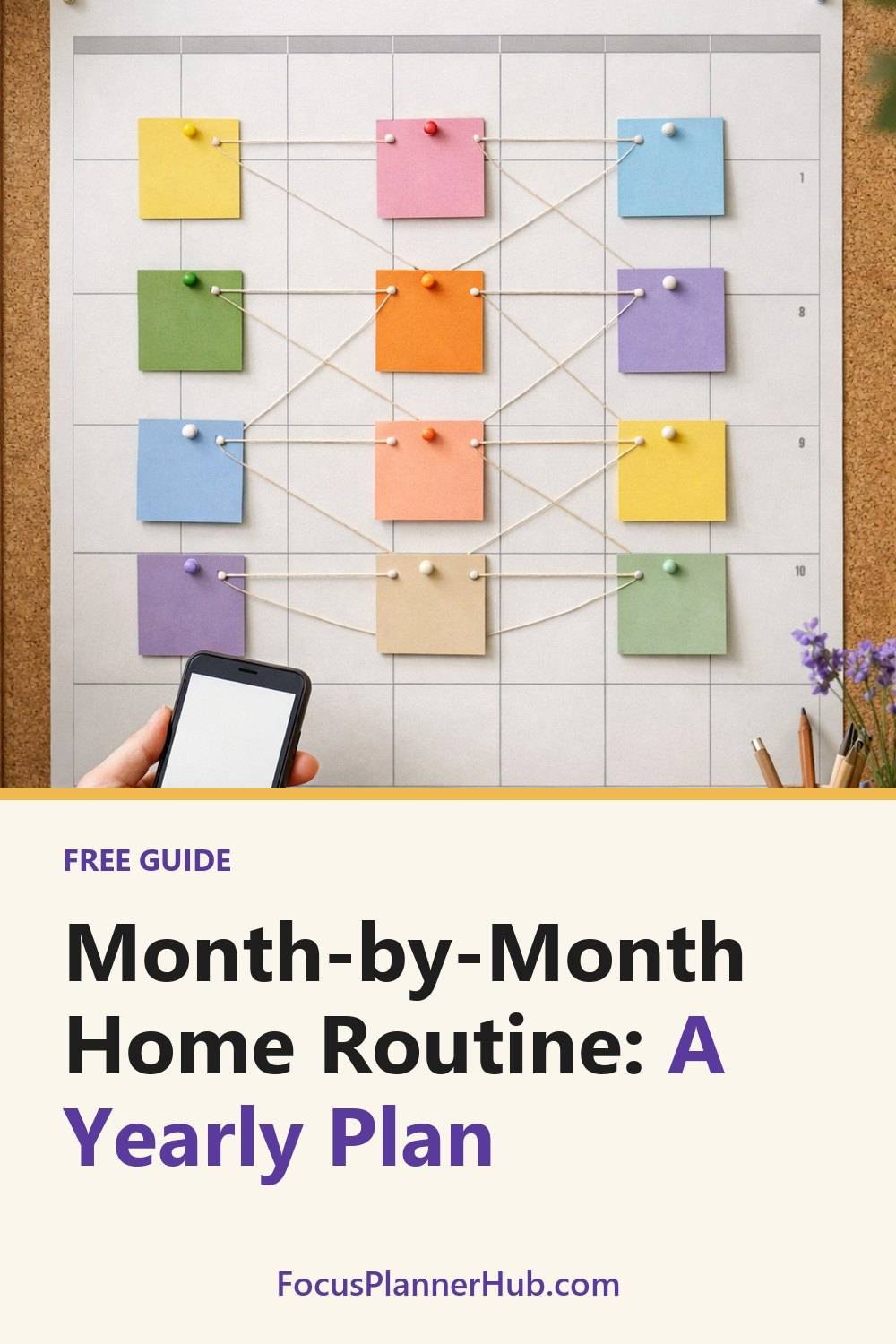
For anyone who prefers paper, sticky notes on a wall calendar make a low-effort way to move monthly chunks around. They suit renters and anyone who changes plans often. Check that the size fits your calendar squares.
Check current plans and prices on each brand's own site before you decide.
FAQ
What if I fall behind by a few months?
Just start with the current month's focus. Don't try to catch up on everything you missed, because that's how burnout happens. You can fold one skipped job into a lighter month later if it still matters.
How long should a monthly focus take?
For me, usually two to four sessions of an hour or two. It depends a lot on the size of your home and how much stuff you have. If it's taking far longer, try breaking it into smaller pieces.
Do I need a home routine planner template for this?
No. A wall calendar, a notebook, a printable template or your phone (an app like Google Calendar works) is fine. Paper lets you see the whole week at once, but use whatever you'll actually look at.
Should I start in January?
You can start any month. Pick up the plan wherever you are on the calendar and go from there. Starting now is better than waiting for a fresh year.
Summary
A yearly home routine gives each month one main focus, keeps weekly chores short, ties safety checks to the seasons and leaves room to adjust every quarter. It's not about a perfect house. It's about not being caught off guard, and not spending every weekend scrubbing.
If you want an easy first step, grab the free weekly planner page in two layouts by joining the email list in the box on this page. Download it, print it out, jot down this week's zone and your first monthly chunk, and see how it feels. That one page is plenty to get started.
Some links on this site may earn us a commission. Read our disclosure.