Desk Organization on a Budget
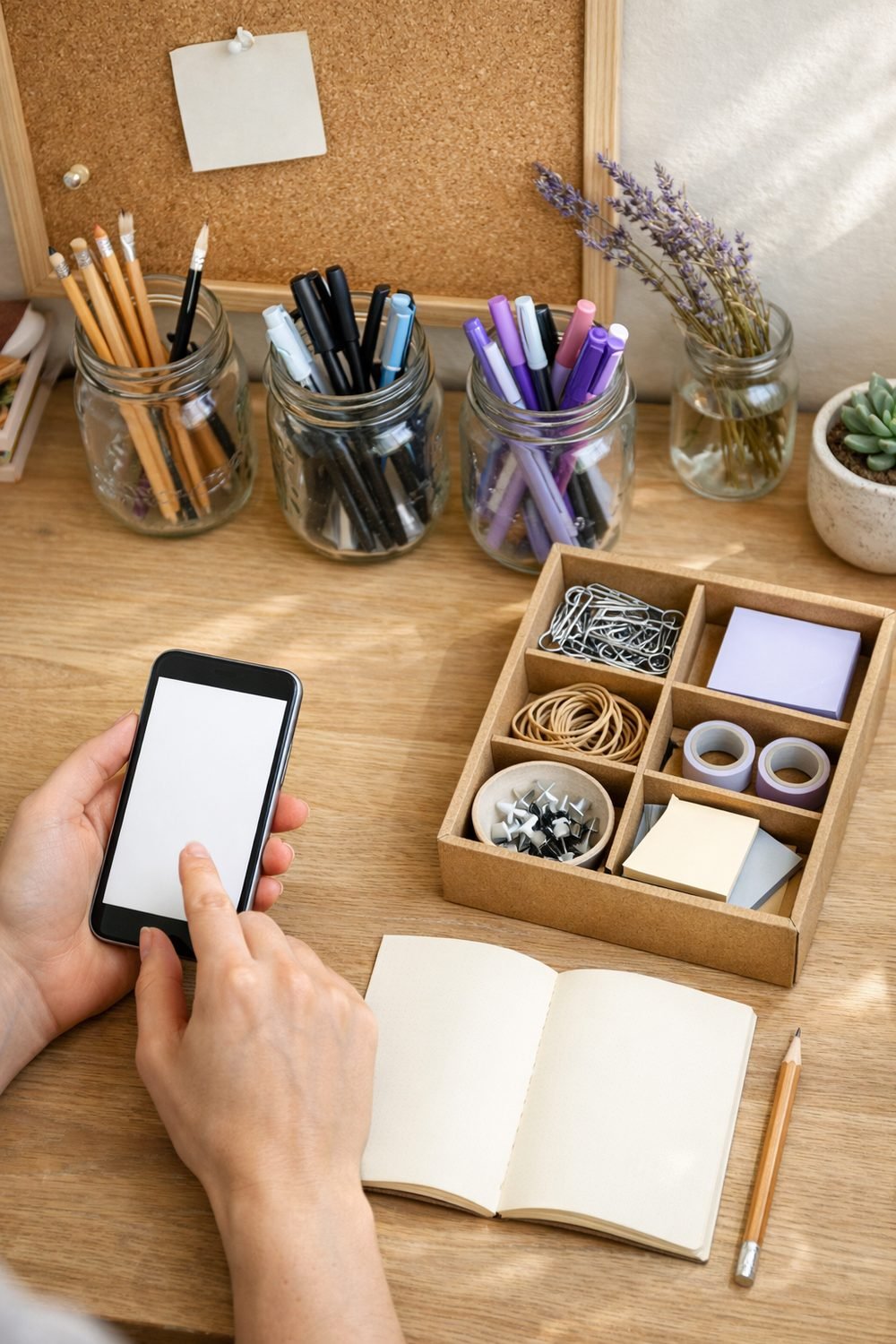
A tidy desk does not need new furniture or pricey gadgets. This guide to desk organization on a budget walks you through emptying, sorting and storing, so everyday items like your budget earbuds, cables and notebooks each have a place.
Many people think they need a nicer desk. What I actually needed was fewer things on the one I had. My old setup was a laptop, three mugs (why three?), a tangle of chargers, and a stack of papers I kept meaning to "deal with." Sound familiar?
The good news is that desk organization doesn't have to cost much. Most of what I'll share here costs nothing at all. Small changes add up, and after a week or two you'll notice you sit down and start working faster, without that low hum of mess in the corner of your eye.
Here's how I'd approach desk organization if I were starting again today.
Short on time? Our top picks: IKEA Desk Organizers, The Container Store Drawer Organizers, Command Hooks by 3M and Velcro Brand Cable Ties. See all picks
Start With a Completely Empty Desk
This sounds dramatic, but it works. Take everything off. Every pen, every sticky note, the lamp, the plant, the random receipt. Put it all on the floor or the bed for now.
Then wipe the surface down. It's a small thing, but it adds up. But sitting at a clean, bare desk for a minute changes how you think about what goes back on it. You stop seeing your stuff as "where it lives" and start asking whether it deserves to be there.
The first time through, it's common to find dried-out highlighters, an unused phone stand, and a forgotten coaster. None of it went back.
Give yourself about 20 minutes for this step. Don't try to organize yet. Just clear.
Sort Your Things Into Groups
Now look at the pile. Instead of putting things back one by one, sort them into rough groups first. Mine usually look like this:
- Writing tools: pens, pencils, highlighters, a marker or two
- Paper: notebooks, sticky notes, loose pages, your planner
- Tech: chargers, cables, earbuds, a mouse
- Personal stuff: lip balm, hand cream, a photo, a snack
- Things that don't belong here: dishes, mail, clothes, that one sock
That last group is the sneaky one. It's often the biggest. Take it back to where it actually lives before you do anything else.
While you're sorting, be honest about duplicates. You probably don't need eleven pens. Keep your three or four favorites and put the rest in a drawer or a box somewhere else. If a pen skips, toss it. Life's too short for pens that skip.
Use Containers You Already Own for Desk Organization
This is where people tend to spend money they don't need to. Those matching desk sets can be tempting too. They look great in photos. But honestly, an old jar holds pens just as well as a fancy cup does.
Before you buy anything, walk around your home and look for:
- Clean glass jars (jam, pasta sauce, candles once the wax is gone)
- Mugs with chips you don't drink from anymore
- Small cardboard boxes, like the ones phones or shoes come in
- Shallow trays or plates for keys, clips, or earbuds
- Zip bags or old pencil cases for cables
A shoebox lid works well for chargers, with the cords loosely coiled. It's not pretty. It works perfectly, and I can grab what I need without untangling anything.
If you want things to match a bit, you can wrap boxes in plain paper or paint jars the same color. That's optional, though. It's best to skip it until you know the setup actually works for you.
A quick tip for cables
Bread bag clips, reusable ties like Velcro Brand cable ties, or a strip of masking tape can keep a cable coiled. You can write on the tape too, so you know which charger is for what. It saves that annoying moment of plugging three into your phone before finding the right one.
Label Things, But Only If It Helps You
Labels are one of those things people either love or find a little silly. Somewhere in the middle is a reasonable place to land.
If you share a desk, or you have drawers where things vanish, labels really do help. A piece of masking tape and a marker is all you need, though a label maker like a Brother P-touch is an option if you love labels. "Cables." "Stamps and envelopes." "Spare notebooks." Done.
But if you only have a few containers and you can see what's in them, labeling every jar is overkill. You'll know the pen jar holds pens.
A simple rule works well: label anything you can't see inside, and anything someone else might need to find. Skip the rest.
Keep Daily Items, Like Budget Earbuds, Close and Store the Rest
This part made the biggest difference for me. Look at your groups and ask what you use every single day. Not "sometimes." Every day.
For me, that's my planner, one pen, a notebook, my laptop, and a water bottle. That's what lives on the desk. Everything else goes into a drawer, a box under the desk, or a shelf nearby.
Think of your desk in zones:
- Within arm's reach: what you touch daily
- A short stretch away: what you use a few times a week, like a stapler or scissors
- Out of sight: backups, spares, and things you use once a month
Your planner deserves a spot right in front of you, not buried under a notebook. If you're trying to plan your days more on paper, I've made a Free Weekly Planner Page in 2 Layouts that you can get by joining the email list, and it fits nicely on a cleared desk.
Once your daily items have a fixed home, you'll notice something: you stop hunting. You reach for the pen and it's there. That's the whole point.
Make Use of Vertical Space on a Small Desk
Small desks fill up fast. When you run out of room on the surface, look up and look under.
A few cheap ideas you can try:
- A couple of books stacked under your laptop or monitor raises it and gives you a little shelf underneath
- A wall hook, such as a Command hook, for headphones or a bag
- A cork board or even a piece of cardboard on the wall for notes, so they're not scattered on the desk
- A box under the desk for paper you need to keep but don't need to see
Go easy on wall notes, though. A board full of sticky notes can turn into its own clutter. Keep them to a handful of current things and clear them when you reset.
If you'd like a step-by-step version of all this, the Set Up Your Desk Starter Guide below this post walks through it in order, with space to plan your own layout.
Reset Your Desk Once a Week
Here's the honest truth: your desk will get messy again. Mine does every week. Mugs come back. Papers pile up. That's normal, and it doesn't mean you failed.
What keeps it from sliding back into chaos is a short reset. Friday afternoon is a good time for a reset, but pick whatever day works for you. It takes about five minutes:
- Take dishes and anything that doesn't belong back where it goes
- Put pens back in their jar and cables in their box
- Toss scrap paper and old sticky notes
- Wipe the surface
- Open your planner to next week
That last step is my favorite. Sitting down on Monday to a tidy desk with the week already looking organized feels really good. It's a small thing, but it makes starting easier.
Desk Organization Picks Worth a Look
You can get a long way with jars and shoeboxes, but a few simple tools can help if one specific problem keeps bugging you. Here are some well-known options to consider after you've tried the free route.
IKEA Desk Organizers
Suits anyone who wants simple trays, boxes, and drawer dividers in one place. Check the measurements against your drawer or shelf before you buy, since sizes vary a lot between lines.
The Container Store Drawer Organizers
A good fit if your main problem is a messy drawer full of loose pens and clips. Measure the inside of your drawer first so the pieces fit snugly.
Command Hooks by 3M
Handy for hanging headphones or a bag on a wall without drilling, which suits renters. Check the weight limit on the pack and the wall surface you plan to use.
Velcro Brand Cable Ties
Suits people with a tangle of chargers who want something reusable instead of bread clips. Check that the length and width suit the thickness of your cables.
Brother P-touch Label Maker
Worth a look if you share a desk or have drawers where things disappear. Check what label tape it uses and whether you will really label enough to justify it over masking tape.
Post-it Notes
A familiar choice for a small cork board or wall area with just a few current reminders. Pick a size that fits your space, and keep the count low so they don't become clutter.
Amazon Basics Monitor Stands
Suits small desks where you want to raise a screen and use the space underneath. Check the stand's weight limit and whether it fits your laptop or monitor before choosing.
Check current plans and prices on each brand's own site before you decide.
FAQ
Do I need to buy organizers to get started?
No. Start with jars, boxes, and trays you already have at home. Use them for a couple of weeks, and if something truly isn't working, then think about buying one specific item to fix that one problem.
What if my desk is really small?
Keep only your daily items on it and move everything else to a drawer, shelf, or box nearby. Raising your laptop on a few books and using a wall hook can free up surprising amounts of room.
How do I stop papers from piling up?
Give loose papers one home, like a single folder or tray, instead of letting them spread out. Then go through it during your weekly reset and toss or file what you can.
How long does the first cleanup take?
For most desks, give yourself an hour or so for clearing, sorting, and setting things back up. After that, the weekly reset only takes a few minutes.
Quick Summary
Clear everything off and start fresh. Sort your things into groups, cut the duplicates, and use containers you already own. Label only what you can't see into. Keep your daily items close and store the rest. Then do a five-minute reset each week so it stays that way.
None of this desk organization needs a big budget. It just needs a little time and a willingness to let go of the stuff you don't use.
If you want an easy next step, grab the free weekly planner page in the sign-up box and put it right in the middle of your newly cleared desk. And if you'd like more help, take a look at Plan Your Week and the other guides below this post. Pick whichever one fits where you are right now.
Printables and tools that can help
Plan Your Week, Set Up Your Desk Starter Guide
A plain-English starter guide to weekly planning and a tidy desk. General information...
See detailsProductivity Planner and Checklist Bundle
A printable bundle with a 30-day goal page, weekly planner and setup checklists for students and remote...
See details