Choosing a Paper Planner: What to Compare

Planners that look perfect in the shop often end up in a drawer by February. Most of the time the planner wasn't the problem. It helps to think about how you actually plan before you pay for a planner.
Planners differ a lot in size, layout, paper and binding, and a good planner comparison starts there. Some of those differences matter more than they first seem. Others hardly matter at all. Below is my planner buying guide: what I compare now, with real examples, so you can pick one you'll still be using in June.
Before you look at a single product, ask yourself one question: when do you plan? At a desk on Sunday night? On the bus? In a quick two minutes between meetings? Keep that answer in your head as you read.
Short on time? Our top picks: Hobonichi Techo, Leuchtturm1917, Moleskine and Erin Condren. See all picks
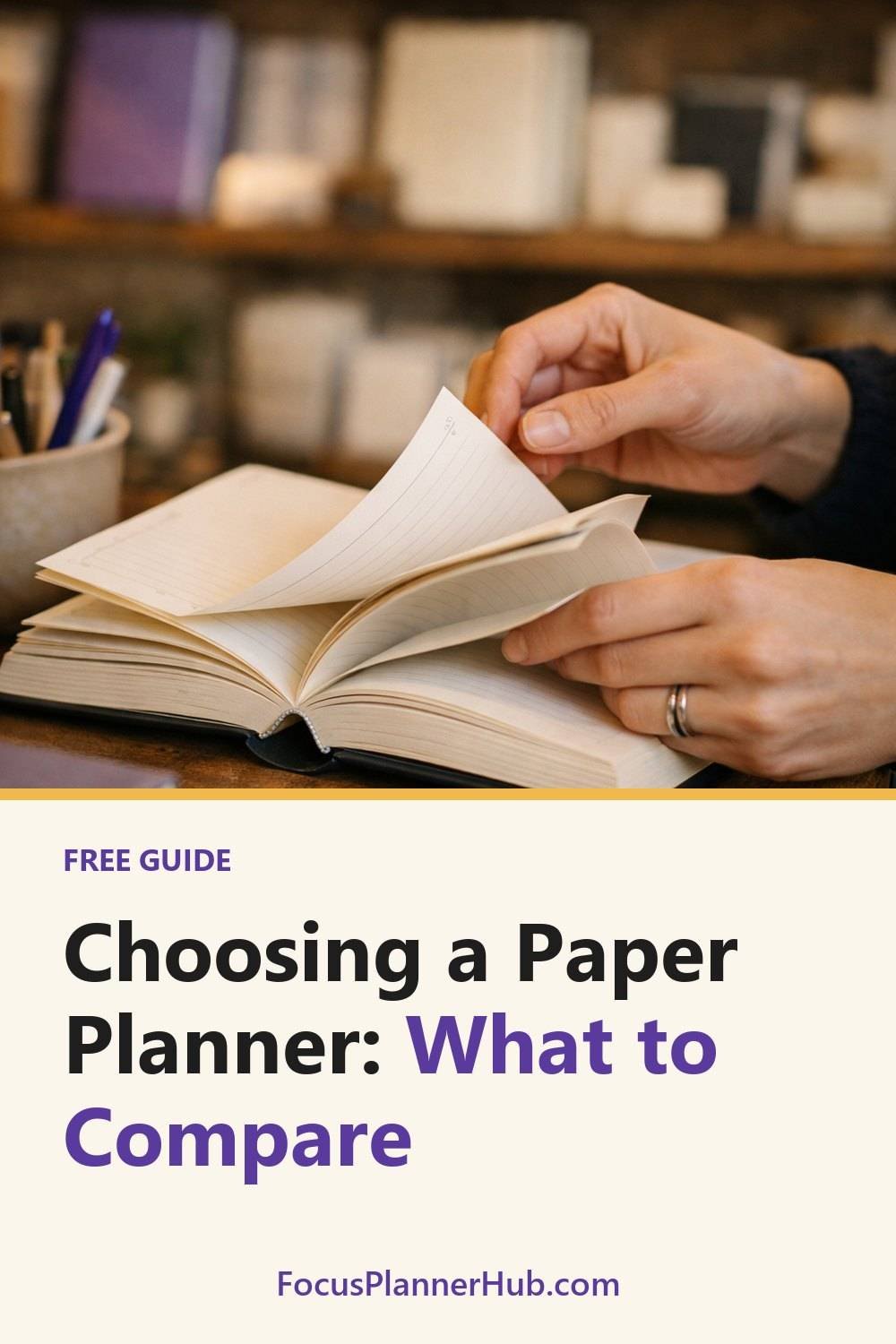
Size: Where Will Your Planner Live, on a Desk or in a Bag?
This is the first thing I check, because it rules out half the options straight away.
A big planner, around A4 or letter size, gives you lots of room. It's lovely on a desk. You can write full notes, stick in receipts and see your whole week at a glance. But carrying it around gets old fast. If you plan to carry it in a tote bag, think about the weight, since a heavy planner is easy to stop bringing along.
A smaller planner, around A5 or a bit under, fits in most bags. It's a size many people find works well. The trade-off is less writing space, so if your handwriting is large you might feel squeezed.
Pocket sizes are cute, but I'd skip them unless you only jot down appointments. There just isn't room for a to-do list and notes.
A quick test: grab a sheet of printer paper, fold it to the size you're thinking about, and write tomorrow's plans on it. If it feels cramped, go up a size.
Layout: Weekly Planners, Daily Planners and More
Layout is where most of the "this isn't working" feelings come from. Here are the common types you'll see:
- Weekly, horizontal: each day is a row across the page. Good for short lists.
- Weekly, vertical: each day is a column, often with times down the side. Good if your days are full of appointments.
- Daily: one page per day. Plenty of room, but the planner gets thick and heavy.
- Monthly planners: a calendar grid. Fine for big dates, not much use for daily tasks.
Most planners mix these. A common setup is a monthly calendar at the start of each month, then weekly pages after it.
For me, a weekly vertical layout works best. Seeing Monday to Sunday side by side makes it easier to notice when Thursday is overloaded. A friend of mine swears by daily pages because she writes long notes from calls. Neither of us is wrong. It depends on how much you write in a day.
Honestly, if you can't decide how to choose a planner layout, start with a weekly one. It's the easiest to stick with, and you won't feel guilty about blank daily pages piling up. If you want to try a few weekly styles on paper first, the Weekly Planner Layout Pack below this post has printable versions you can test before buying anything bound.
Paper: Check It Against Your Favourite Pen
This one catches people out. You might love a planner and then find your favourite pen bleeds straight through to the next page.
Think about what you actually use:
- Ballpoint pens are forgiving on almost any paper.
- Gel pens can smudge on smooth paper if you're left-handed.
- Fountain pens and markers need thicker paper, or they'll bleed and show through.
- Pencils like a little texture, so very smooth paper can feel slippery.
Sellers often list paper weight, usually in gsm. A higher number usually means thicker paper, but it's not a perfect guide. Coating and finish matter too. If the listing doesn't say, look at photos or reviews where people show the back of a written page. That tells you more than a number.
A fine gel pen and a light marker work well for writing and highlighting. So I always look for comments about "ghosting," which is when you can see writing faintly from the other side. A little ghosting doesn't bother me. Full bleed-through does.
Binding: Does It Lie Flat?
This sounds minor until you're holding a planner open with one hand and writing with the other.
Spiral or coil binding lies flat and can fold back on itself. That's great for small desks. The downside is the coil can snag in a bag or get bent out of shape.
Sewn or stitched binding looks neater and feels sturdier. Some open flat after you break them in, and some never quite do. Check photos of the planner open on a table.
Disc or ring systems let you add and remove pages. The idea can be more appealing than the reality. It's easy to spend more time rearranging pages than planning. If you love tinkering, you might enjoy it. If you just want to write things down, I'd pick something simpler.
Glued binding is the one I'd be most careful with. It's often cheaper, and pages can come loose with heavy use.
Start Month: Dated or Undated?
Dated planners have the dates printed in. They save time and look tidy. But they usually start in January, or in late summer for academic planners. If you buy one in March, you've paid for two months you'll never use.
Undated planners let you start any week you like. You write the dates in yourself. The catch is that it's easy to skip a week or two, and nothing on the page reminds you. Some people find that freeing. It can be a little too easy to drift.
A few things worth checking here:
- Does the dated planner start on Monday or Sunday? This bugs some people more than they'd expect.
- Does it cover 12 months, or 18?
- Are holidays printed in, and are they the ones for your country?
If you want to try a layout before you commit to any planner, you can grab the Free Weekly Planner Page in 2 Layouts by joining our email list.
The Extras: Nice or Just Noise?
Many planners come with extras. Habit trackers, goal planner pages, budget sheets, stickers, pockets, ribbon markers.
Some of these are genuinely handy. A ribbon marker saves time when you flip to today's page, and a back pocket is handy for loose receipts. Others are overrated, in my opinion. A "vision for the year" page often goes unfilled past the first line. Pages of inspirational quotes take up space I'd rather use for notes.
So don't let a long list of extras sway you. Count how many you'd really use. If it's one or two, that's fine, but they shouldn't be the reason you buy it.
Read the Seller's Page Carefully
Planner details change from year to year. Paper might change, sizes can shift slightly, and a layout you loved last year might be redesigned. Photos on the page aren't always updated either.
Before you buy, check the seller's page for the current version. Look at the size in actual measurements, not just a name like "medium." Check the paper details, the binding type, the start date and the return policy. If something isn't listed, it's fair to message the seller and ask.
If you're comparing more than two planners, try a simple checklist and write these details side by side so you're not relying on memory. The Planner Buyer's Guide and Comparison Sheets below this post are set up for exactly that, if you'd like something ready to fill in.
Planners Worth Looking At
These are well-known paper planner brands that cover the main styles discussed above. Use the comparison points in this post to decide which one fits how you plan.
Hobonichi Techo
Suits people who like a compact planner and enjoy writing small. Check the current paper details and whether you can get the size and language edition you want.
Leuchtturm1917
A good fit if you want a sewn, notebook-style planner with a tidy look. Check which layout, dated or undated, and which size the specific edition uses before buying.
Moleskine
Suits people who want a familiar, widely sold planner they can often find in shops and try in person. Check the paper against your favourite pen, since bleed-through varies by pen type.
Erin Condren
Suits people who like colourful, customisable weekly layouts and plenty of extras. Check how many of those extras you would really use, and confirm the start month.
Rhodia
Worth a look if smooth paper and a clean, simple look matter to you. Check the layout and binding style of the specific planner, and whether the paper suits your pen.
Day Designer
Suits people who like structured daily pages with room for priorities and time blocks. Check how thick and heavy the planner is if you plan to carry it around.
Filofax
Suits people who like a ring system where you can add and swap pages. Check whether you will enjoy rearranging pages or just want to write things down.
Check current options and prices on each brand's own site before you buy.
FAQ
How do I know what size planner I need?
Think about where it will live most of the time. If it stays on a desk, go bigger. If it travels with you, a smaller size like A5 is usually easier to carry.
Is a daily or weekly planner better?
Neither is better for everyone. Weekly layouts suit people with short to-do lists and a few appointments. Daily pages suit people who write longer notes or have very busy days.
What does gsm mean for planner paper?
It's a measure of paper weight, and higher numbers usually mean thicker paper. It's a helpful hint, but the paper's coating matters too, so check reviews or photos with your type of pen in mind.
Can I start a planner in the middle of the year?
Yes. An undated planner lets you start any week, and some dated planners run mid-year to mid-year. Check the start date on the seller's page before buying.
A Quick Recap for Choosing a Paper Planner
Start with how and where you plan. Then compare size, layout, paper, binding and start date, in roughly that order. Treat extras as a bonus, not a reason to buy. And always check the seller's current page, since details change.
If you'd like to test a layout before spending money, grab the free weekly planner page from the sign-up box first. Then, if you want help comparing options or trying more styles, take a look at the products below this post.
Printables and tools that can help
Planner Buyer's Guide and Comparison Sheets
A printable guide and comparison sheets to note what matters to you before you look at any seller...
See detailsWeekly Planner Layout Pack
Five printable weekly planner layouts so you can pick the one that fits how you...
See details